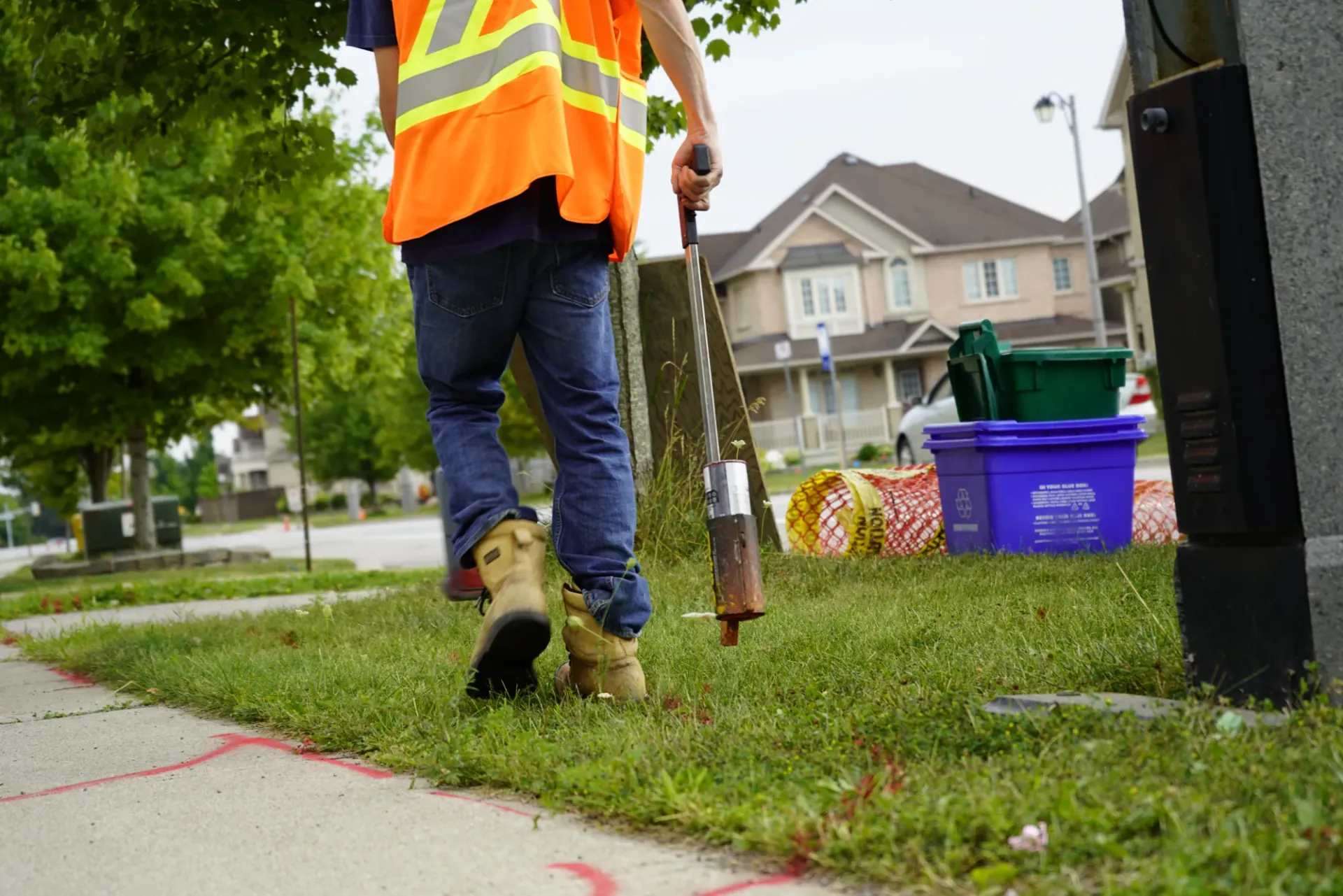
Every dig in America starts with a locator. Before a shovel, an auger, or an excavator touches the ground, someone has to find the buried gas, power, water, and fiber lines — and mark exactly where they run. That someone is in short supply, and you don't need a degree or prior experience to become one.
What does a utility locator do?
A locator receives a dig ticket, drives to the site, and traces the buried utilities with an electromagnetic receiver. They mark each line with paint and flags in the color code of its utility — yellow for gas, orange for telecom, blue for water. Their marks protect the excavation crew, the public, and the infrastructure itself. If you want the full picture of the trade, start with our guide to utility locating.
What do utility locators earn?
Entry-level utility locators in the U.S. typically start at $21–22+ per hour, based on current market listings, with experienced locators and crew leads earning more. Locating is also a proven first step into higher-paying utility careers: telecommunications line installers, for example, earn a median of $74,330 per year (U.S. Bureau of Labor Statistics, May 2025).
What skills do you need?
- Attention to detail. A locate is a measurement, not a guess. Careful work is the whole job.
- Comfort outdoors. Locators work on live streets, lawns, and job sites in every season.
- Basic tech literacy. Modern locating runs on GPS tablets, digital tickets, and mapping apps.
- A driver's license. The work is route-based — you drive to each ticket.
Notice what's not on the list: a college degree, construction experience, or physical bulk. Locating rewards care and consistency, which is why career changers and newcomers do well in it.
How do you get trained and certified?
There is no national license for utility locating — employers hire for demonstrated competence. That's exactly what a focused program gives you. CUTI's Utility Locating & Damage Prevention program takes 4 weeks: classroom theory, then real field training on live equipment. After class you move into a paid 3-month practicum with a sponsoring employer, and sponsored graduates finish with a secured job placement. With employer sponsorship, tuition is $0.
The route, step by step
- 1. Apply. No experience required — the application takes minutes.
- 2. Train for 4 weeks. In class and in the field, on the same equipment crews use daily.
- 3. Work a paid practicum. Three months on real tickets with a sponsoring employer.
- 4. Start your career. Sponsored graduates step into full-time placement.
The full journey is laid out on our How It Works page.
Ready to get field-ready? Apply now to hold a seat in the next open cohort of the Utility Locating & Damage Prevention program.
Apply today →