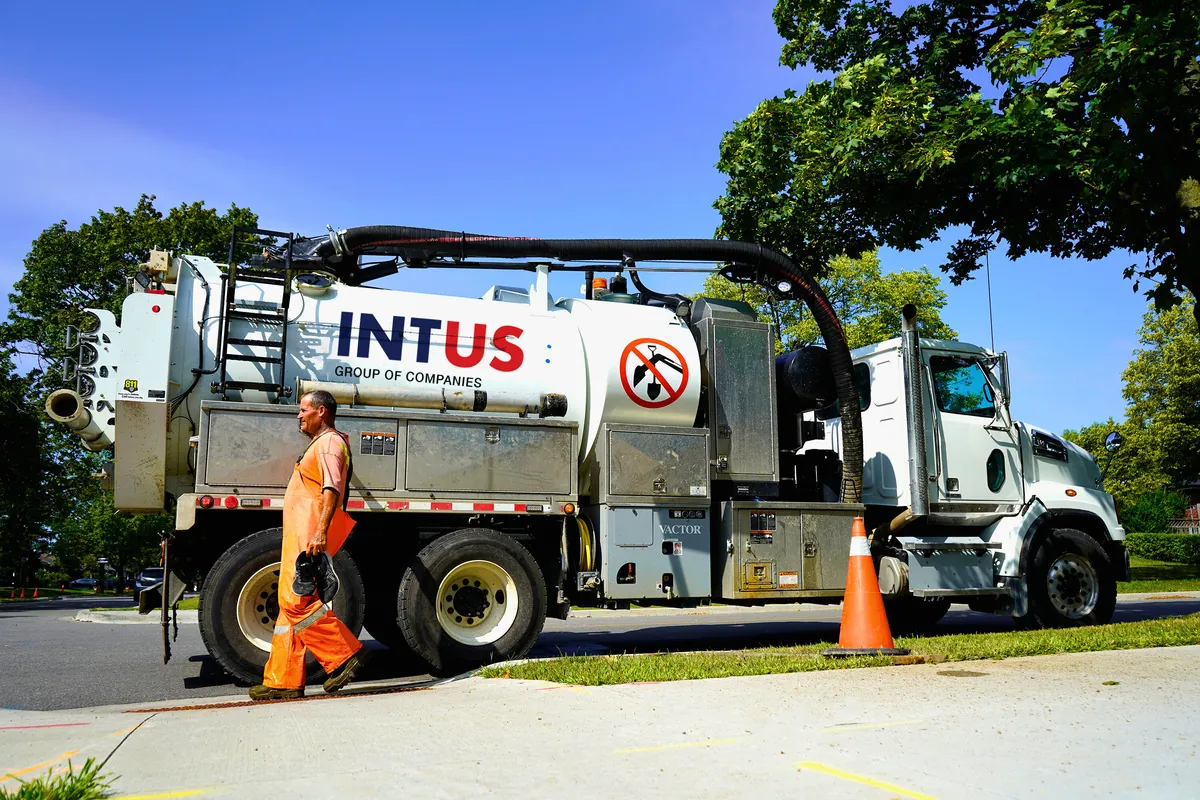
Hydrovac excavation digs with pressurized water instead of steel. The water cuts the soil into a slurry; a powerful vacuum lifts the slurry into a debris tank on the truck. The result is a clean, precise hole — and a buried pipe or cable exposed without a single blade coming near it.
Why not just use an excavator?
Because steel doesn't forgive. A bucket that clips a gas main or a fiber trunk causes outages, repair bills, and real danger. Hydrovac removes that risk: water won't slice a line the way a tooth will. That's why safety rules and utility owners increasingly require daylighting — physically exposing a buried line to confirm its position — before mechanical digging near it. It's a standard step in the 811 locate process whenever marks alone aren't enough.
Where hydrovac crews work
- Daylighting utilities ahead of construction and repairs.
- Slot trenching for new cable, conduit, and pipe in congested ground.
- Pole and pile holes dug to spec without disturbing what's beside them.
- Debris and spoil removal in spaces machines can't safely reach.
What the work is like
Hydrovac is a two-person craft: an operator running the boom, wand, and vacuum, and a ground hand guiding the cut. You work outdoors, on live utility corridors, with real responsibility — the hole you dig is often centimeters from the line you're protecting. For scale: general construction laborers earn a median of $25.02 per hour (U.S. Bureau of Labor Statistics, May 2025), and specialized equipment operators sit above general labor in most markets.
How to become a hydrovac operator
CUTI's Hydrovac Excavation program trains you on the truck, the tooling, and the damage-prevention rules that govern the work — no prior experience needed. Like every CUTI program, it pairs classroom learning with field training, then a paid 3-month practicum with a sponsoring employer. With sponsorship, tuition is $0. Many operators also cross-train in utility locating — the two skills show up on the same job sites.
Rather dig with water than a shovel? Hold a seat in the next open hydrovac cohort.
See the program →